

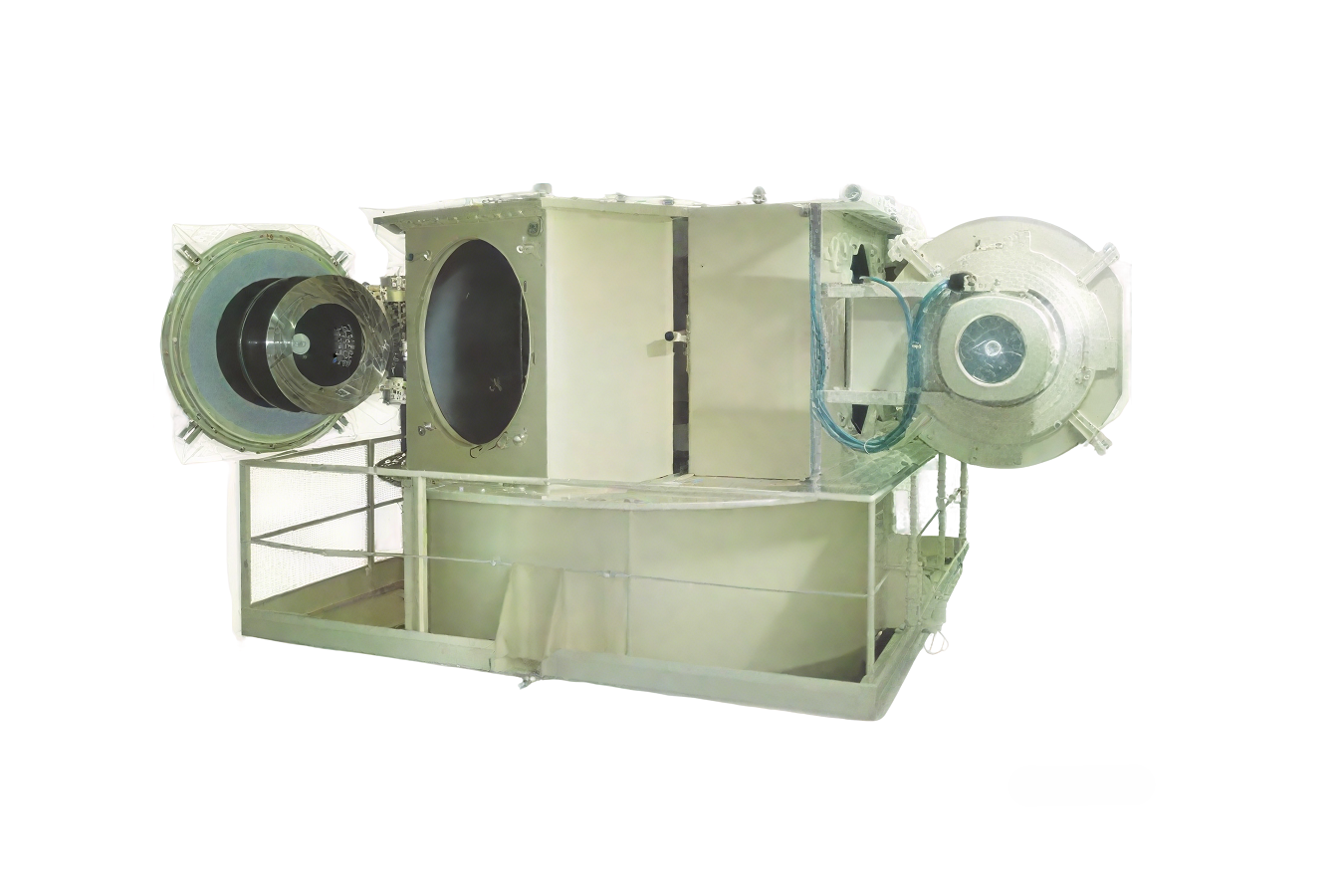
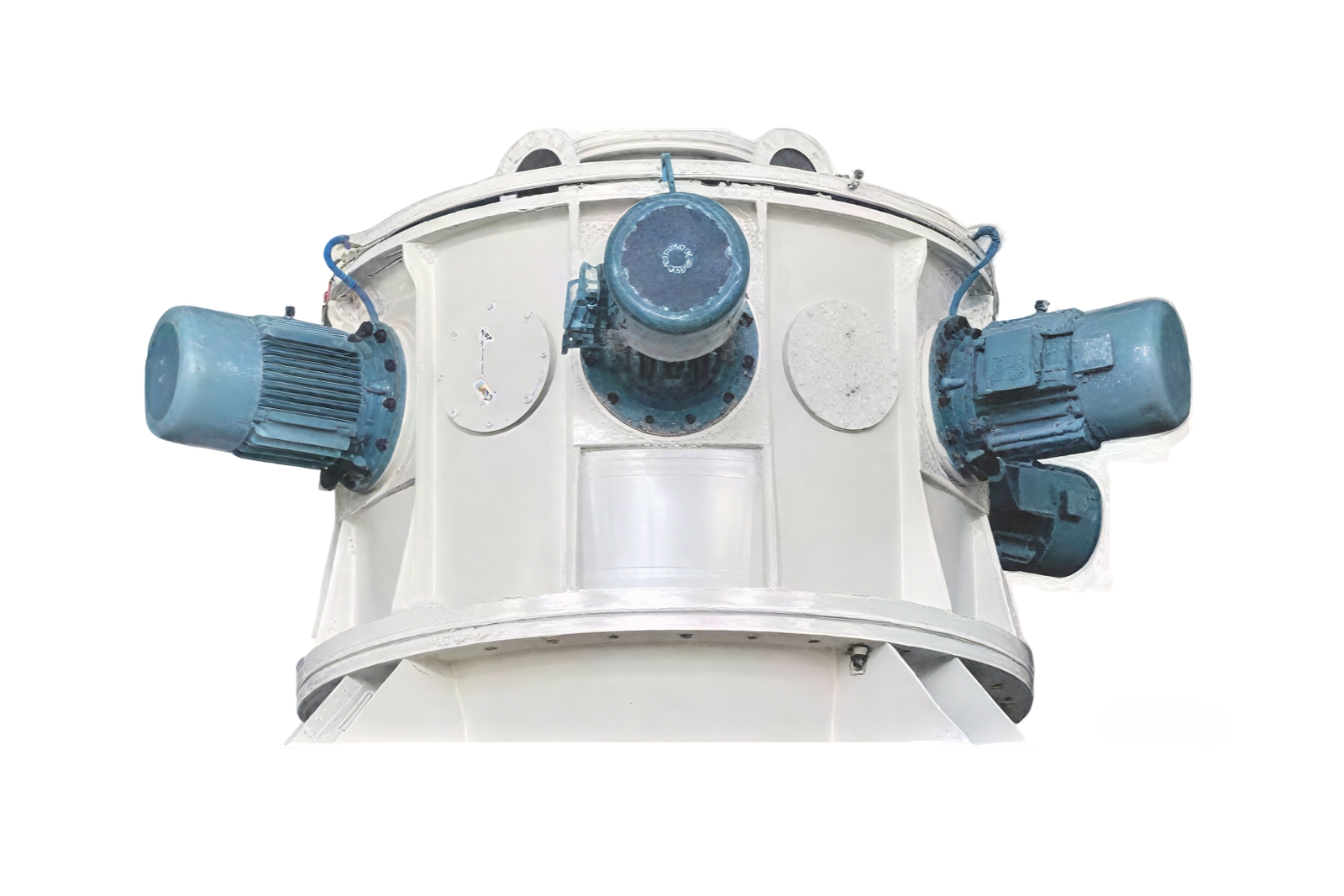
 The classifier works together with the cyclone collector, pulse dust collector, induced draft fan, and control cabinet to form a complete classification system. Driven by the suction force of the fan, the material enters the classifier inlet and rises rapidly with the airflow into the classification zone. Under the strong centrifugal force generated by the high-speed rotating classification rotor, the powder in the gas–solid two-phase flow is separated according to particle size. Fine particles that meet the required size pass through the gaps between the classifier blades and are collected in the cyclone separator or dust collector. Oversized particles, carrying a small amount of fine powder, are thrown against the cylinder wall by centrifugal force and fall to the secondary air inlet. Here, the strong washing effect of the secondary airflow separates the coarse and fine fractions: the fine particles are carried upward for secondary classification, while the coarse particles descend to the discharge outlet for removal.
| Model | Capacity (t/h) | Fineness (μm) | Efficiency (%) |
|---|---|---|---|
| AF200-4 | 0.3-0.8 | 2-45 | 70-90 |
| AF200-6 | 0.5-1.0 | 2-45 | 70-90 |
| AF315-4 | 0.8-1.5 | 2-45 | 70-90 |
| AF315-6 | 1.0-3.0 | 2-45 | 70-90 |
| AF400-4 | 1.0-3.0 | 3-45 | 70-90 |
| AF400-6 | 2.0-5.0 | 3-45 | 70-90 |
| AF500-4 | 3.0-8.0 | 5-45 | 70-90 |
| AF500-6 | 5.0-15.0 | 5-45 | 70-90 |